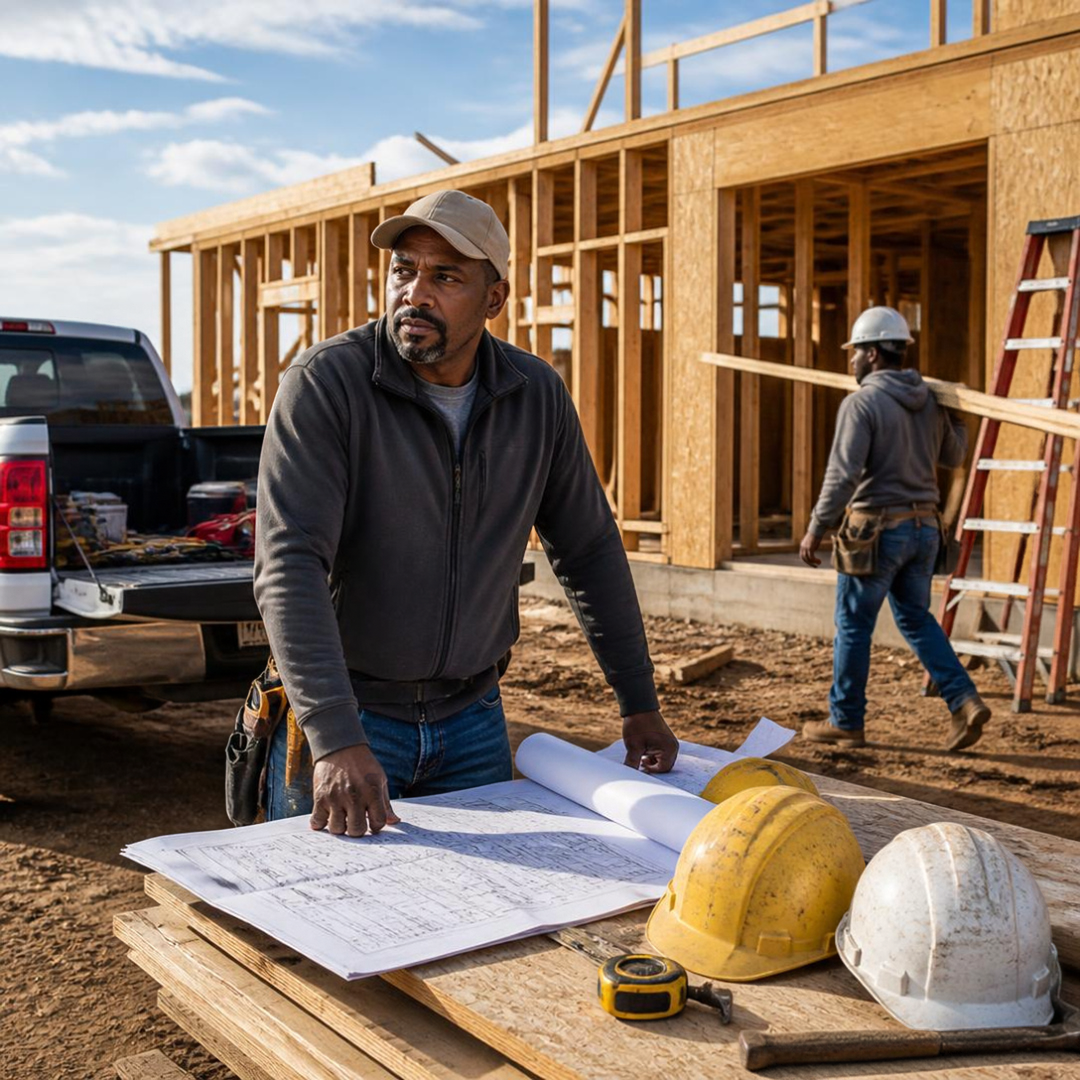
Abilene, Tx labor squeeze
> Data Centers, Skills Gaps, and the Old Hiring Playbook.
> Local impact of the Stargate data center pulling skilled workers (electricians, contractors) with higher pay.
> Real Abilene examples of delayed projects and lost employees, Texas-wide data showing half of firms are hiring but face a shortage of applicants. Why does traditional hiring no longer work?
> How a lead system helps owners step away from day-to-day operations.
Spending most of my days serving the greater Abilene community I see that our local businesses are not failing to hire because of laziness or low pay alone. There’s a combination of large projects pulling skilled labor away, a shortage of qualified applicants, and outdated hiring methods that leaves owners stuck doing the work themselves.
Local facts and context you can use (with sources):
Labor market snapshot – Abilene Metropolitan Statistical Area (Bureau of Labor Statistics)
- Civilian labor force: 89.5–90.0 thousand (March–August 2026).
- Employment: 86.1–86.7 thousand.
- Unemployment rate: 3.0–4.0 % (not seasonally adjusted), hovering near 3.9 % in the most recent preliminary data.
- Total nonfarm employment: 81.1 thousand, up modestly year-over-year.
Source: U.S. Bureau of Labor Statistics, “Abilene, TX Economy at a Glance,” data extracted September 29, 2026.
https://www.bls.gov/eag/eag.tx_abilene_msa.htm
Texas-wide hiring difficulty (Dallas Fed)
- Half of surveyed Texas firms were actively trying to hire as of July 2026 (up from a recent low of 44 %).
- Top impediment: shortage of applicants / no applicants.
- Second: applicants wanting more pay than offered.
- Lack of experience / hard skills also ranked high and has been rising.
Source: Federal Reserve Bank of Dallas, Texas Business Outlook Surveys – Special Questions, July 2026.
https://www.dallasfed.org/research/surveys/tbos/2026/2607q
Construction and skilled-trades pressure (AGC)
- Large majorities of Texas construction firms report difficulty filling both salaried and hourly positions.
- Worker quality, rising labor costs, and insufficient supply of workers/subcontractors are consistently cited as top challenges.
- Data-center a.k.a Super-intelligence Centers (SI Centers) and large industrial projects are explicitly pulling electricians and other skilled trades away from residential and smaller commercial work.
Sources: Associated General Contractors of America 2026 Workforce surveys and Texas-specific updates (multiple releases, 2026).
Abilene-specific data-center / SI Centers impact (Stargate / Oracle)
- The Stargate “Super-Intelligence” data-center project in Abilene is described as one of the most expensive data-center builds in the U.S.
- It generated thousands of construction jobs and is projected to create roughly 1,000 long-term positions.
- Local contractors and homebuilders report electricians and skilled trades being recruited at significantly higher wages (in some accounts, double what smaller local firms can offer).
- Specific local examples:
– Gene Lantrip (homebuilder, south Abilene) reported projects taking two months longer because subcontractors lost lead electricians and helpers to the data center.
– Scotty Wristen (WE Electric, Abilene) lost five workers to data-center work; he can only afford to pay around $20/hour while data centers pay substantially more.
Sources: - KUT Radio / NPR, “How the Stargate data center project has impacted Abilene,” August 12, 2026.
https://www.kut.org/energy-environment/2026-08-12/abilene-tx-stargate-ai-data-center-economy-housing-crisis - KXXV, “Data center boom strains Texas homebuilders’ need for electricians” (features Abilene contractors).
- The Real Deal Texas, “Data Centers, ICE Crackdown Creating Labor Squeeze in Texas,” September 21, 2026.
https://therealdeal.com/texas/2026/09/21/data-centers-ice-crackdown-creating-labor-squeeze-in-texas/
Broader Texas small-business hiring difficulty
Top ranked challenges: lack of relevant work experience, applicants unwilling to accept the offered terms, soft-skill and occupational-skill gaps.
Source: Texas Workforce Investment Council / related statewide employer surveys (2026 data referenced in public summaries).
More than two-thirds of businesses that tried to hire in the prior 12 months reported difficulty.
Small employers (2–19 employees) still faces high difficulty rates even if slightly lower than larger firms.
The numbers and local stories make one thing clear: the old hiring playbook is broken. Posting a job, hoping the right person appears, and then hoping they stay no longer works when big projects can double wages overnight and the skilled labor pool is already stretched thin.
The solution is not simply offering more money or running more ads. It is building the systems that attract the right people, develop them into reliable leads, and keep them long enough that the business no longer depends on the owner showing up every single day.
Start with the Lead System
Most small businesses hire into chaos. A new employee arrives with no clear role description, no documented processes, no training path, and no visible next step. They either leave quickly or stay and remain dependent on the owner for every decision.
A true Lead System reverses that. It turns every key position into a development track:
• Clear written processes so the work can be done without constant owner intervention.
• Defined standards and checklists so performance is measurable.
• A simple progression path (helper → lead → supervisor) so people see a future inside the company instead of looking for the next higher-paying job.
• Regular coaching conversations focused on skill growth rather than just putting out fires.
When a business has even one solid lead in place, the owner finally gains breathing room. The lead runs the day-to-day. The owner can step back, focus on growth, or simply take a day off without the whole operation stopping.
How the Full Eight-System Program Sustains Employees
The Lead System is the first and most urgent piece, but lasting results come when it sits inside a complete operating system. The eight-system approach addresses the full cycle of hiring and keeping people:
1. Lead / Leadership Development — Turns good employees into people who can run the business without you.
2. Hiring & Recruiting — Moves beyond “post and pray” to a repeatable process that attracts candidates who fit the culture and the work.
3. Onboarding & Training — Shortens the time to productivity and reduces early turnover.
4. Operations & Process Documentation — Makes the work teachable and consistent so new people succeed faster.
5. Accountability & Performance — Creates clear expectations and regular feedback so problems are caught early.
6. Culture & Communication — Builds the kind of workplace people want to stay in even when bigger paychecks are available elsewhere.
7. Compensation & Retention — Structures pay, recognition, and growth opportunities so you compete on more than just wages.
8. Owner Freedom / Exit Systems — Ensures the business can run without the owner’s daily presence, which is the ultimate goal for most small-business owners.
When these systems work together, hiring stops being a constant emergency and becomes a predictable process. Employees stay longer because they can see a path, understand the standards, and feel supported. The owner is no longer the bottleneck.
What This Looks Like for an Abilene Business
Imagine a local contractor or service company that installs the Lead System first. Within a few months one reliable lead is running the crew. The owner is no longer covering every shift or solving every problem. Hiring becomes easier because candidates can see a structured environment instead of chaos. Turnover drops because people have clear growth paths and consistent coaching.
The business becomes more valuable, more stable, and far less dependent on any single person — including the owner.
Abilene’s labor market is not going to suddenly become easy. Data centers and large projects will continue to pull skilled workers. The businesses that thrive will be the ones that stop relying on hope and start installing systems.
If your company still depends on you showing up every day because you cannot find or keep the right people, the first system to install is the one that develops leads. From there the rest of the eight systems create the structure that turns hiring from a constant struggle into a manageable, repeatable process.
Are you ready to see how the Lead System and the full eight-system program can work in your business? Take our free assessment or reach out directly. The goal is simple: Develop your business to run without you having to be there every day!
Where is this type of detailed information filed?
1. Federal government statistical agencies
- U.S. Bureau of Labor Statistics (BLS)
Primary source for the Abilene MSA labor-force, employment, unemployment-rate, and nonfarm payroll data.
Filed under: “Economy at a Glance” series and Local Area Unemployment Statistics / Current Employment Statistics programs.
Official page: https://www.bls.gov/eag/eag.tx_abilene_msa.htm
Data is updated monthly and retained in BLS historical databases.
2. Regional Federal Reserve research
- Federal Reserve Bank of Dallas – Texas Business Outlook Surveys
Special Questions on hiring activity, impediments to hiring, applicant shortages, wage pressure, and skills gaps.
Filed under the monthly/quarterly TBOS releases (e.g., July 2026 Special Questions).
Official page: https://www.dallasfed.org/research/surveys/tbos/
3. Industry association surveys
- Associated General Contractors of America (AGC)
Annual and mid-year Workforce Surveys (national + Texas-specific).
These contain the data on difficulty filling craft and salaried positions, worker quality, labor-cost pressure, and competition from large projects.
Published as PDF reports on the AGC website and state chapters.
4. Local and regional journalism / investigative reporting
- KUT (Austin NPR) / Texas Public Radio – long-form pieces on the Stargate/Oracle data-center impact in Abilene (housing, labor pull, local business effects).
- KXXV and other local Texas TV/news outlets – on-the-ground interviews with Abilene contractors (e.g., electricians and homebuilders losing workers).
- The Real Deal Texas and similar business-real-estate publications – coverage of data-center construction labor squeeze and related immigration/enforcement effects.
These news stories are archived on the respective news organizations’ websites and are the source of the named local examples (Gene Lantrip, Scotty Wristen / WE Electric, etc.).
5. State-level workforce agencies
- Texas Workforce Investment Council / Texas Workforce Commission reports and employer surveys that track hiring difficulty by firm size, skill gaps, and experience shortages. These are published as public PDFs or data tables on state government sites.
How the information is organized
- Primary statistical series (BLS, Dallas Fed) are structured time-series databases with monthly or quarterly releases.
- Survey results (Dallas Fed Special Questions, AGC) are published as downloadable tables and narrative summaries.
- Local impact stories live in news archives and can be cross-checked against the statistical series.
Nothing in the package I gave you is proprietary or locked behind a paywall for the core numbers; the underlying data is public. The named contractor anecdotes come from contemporaneous local reporting that itself cites the same BLS and industry data.