
Afrikaners in Abilene TX: Why the U.S. Is Helping Some White South African Refugees
In communities like Abilene, Texas – long a destination for migrants and refugees-new arrivals from South Africa have drawn quiet attention amid larger waves of newcomers. These are primarily Afrikaner refugees admitted under Executive Order 14204 (EO14204), “Addressing Egregious Actions of the Republic of South Africa,” signed by President Donald Trump on February 7, 2025. The white South African refugees are the exception to the rule because they are fleeing from a ‘white genocide’ that has been happening in South Africa. Although these claims have been refuted by the Afrikaner community, President Trump is not only focused on physical harm, but he is arguing that the South African Government is using racist legislation to drive out the Afrikaner community.
Afrikaner refugees often stay quiet due to fear of retaliation, discrimination, the politicized “white-genocide” narrative , and concerns about being considered privileged. The order EO14204 prioritizes resettlement of Afrikaners facing what the administration describes as government-enabled (systemic) racial discrimination, including land expropriation without compensation under South Africa’s Expropriation Act 13 of 2024, South Africa’s Broad-Based Black Economic Empowerment (B-BBEE) rules, alongside documented farm attacks and political rhetoric that has heightened insecurity for minority farming communities.
Critics have labeled the policy racist, pointing to the heavy focus on Afrikaners within a sharply reduced overall refugee admissions ceiling. Yet the record shows a different driver: a coherent ‘America First’ approach centered on U.S. national interests—economic leverage, critical mineral security, reciprocal trade fairness, and selective humanitarian relief for groups assessed as both genuinely at risk and capable of rapid assimilation—rather than racial favoritism or division.
Look Deeper

South Africa gets special trade deals with the United States. That means South African companies can sell many products to America without paying extra taxes. This deal is called AGOA. The AGOA program is up for renewal January 2027, and the South African Government is under scrutiny and may not be eligible for renewal considering the “white-genocide” accusations.
The Trump administration is reviewing that deal because of several problems:
- South Africa’s government takes private land without paying fair prices.
- Rules force companies to give ownership shares based on race. That makes it harder for American businesses (including Elon Musk’s companies) to work there.
- South Africa is teaming up more with countries like Russia, China, and Iran — countries that often work against U.S. interests.
- South Africa has huge amounts of important minerals (like platinum and chromium) that American industries need for cars, planes, and defense. The U.S. wants fair access to those resources.
This isn’t about hating one race. It’s about fair trade, protecting American companies, and keeping important materials available for the U.S.
Who’s involved?

- President Trump – He signed the order letting Afrikaners come as refugees and is pushing for tougher trade rules with South Africa.
- Elon Musk – Born in South Africa, he has complained that the country’s race-based business rules block companies like his. He wants rules that treat all businesses the same.
- Stephen Miller – A top Trump advisor on immigration. He focuses on letting in people who can fit into American life and on keeping refugee numbers low overall so the system doesn’t strain American resources.
Together they are choosing policies that help the United States first – better trade deals, secure supply chains, and limited help for people facing real problems.
The simple truth
The United States is not trying to divide people by race. It is trying to:
- Protect American jobs and companies
- Get fair access to important minerals
- Keep trade deals fair
- Offer limited help to people who face specific dangers
That’s putting America first.

What happens to the refugees here in Abilene?
Once someone is accepted as a refugee, they keep that status. After a year they can apply for a green card. Later they can become U.S. citizens. Changes in trade deals with South Africa don’t take away the status of people already here.
How This Affects Abilene, Texas
Abilene has been a refugee resettlement city for more than 20 years. The International Rescue Committee (IRC) has an office that helps new arrivals find housing, jobs, schools, medical care, and English classes. In the past, most refugees came from places like the Congo and other parts of Africa. The city and local churches have long supported these families.
What’s changing now?
Under the Trump administration’s policy, almost all new refugees allowed into the United States are Afrikaners (white South Africans). Texas is taking in more of them than any other state. Hundreds have been approved for Texas overall.
Abilene is one of the places in Texas that already has a refugee support system, so some of these families are already settled. Exact numbers for Abilene alone are not huge compared with bigger Texas cities, but even a few dozen new families can be noticeable in a mid-sized town.
Practical effects on Abilene
- Housing and jobs: New families need places to live and work. Afrikaners often speak English and many come from farming backgrounds, so they may find jobs faster than some earlier refugee groups who spoke little English.
- Schools: Kids enroll in local schools. Teachers and staff already have experience helping refugee students, but any increase adds to class sizes and support needs.
- Health and city services: Abilene’s health department and social services help new arrivals with medical checks and basic needs. In 2025 there was a temporary funding freeze that affected some refugee health programs, showing how federal policy changes can quickly hit local offices.
- Community life: Local churches and volunteer groups that already help refugees will likely assist these new families too. Some Afrikaners may start farms or small businesses, similar to how earlier refugees have grown gardens and opened shops in Abilene.
The bigger picture for the town
Abilene has absorbed refugees for years without major disruption. Many past arrivals became homeowners, workers, and community members. The new South African families are expected to follow a similar path—especially since many already speak English and come from rural or farming backgrounds that fit West Texas life. The main difference is that overall refugee numbers nationwide are now much lower and almost entirely focused on this one group. For Abilene, that means fewer total new arrivals than in peak years, but the ones who do come are mostly Afrikaners instead of people from many different countries.
In short: Abilene will probably see a modest number of these South African families settle here. The town’s existing refugee support network (IRC, churches, schools) will help them get started, just as it has helped others for two decades. The impact should be manageable and similar to past waves of newcomers.
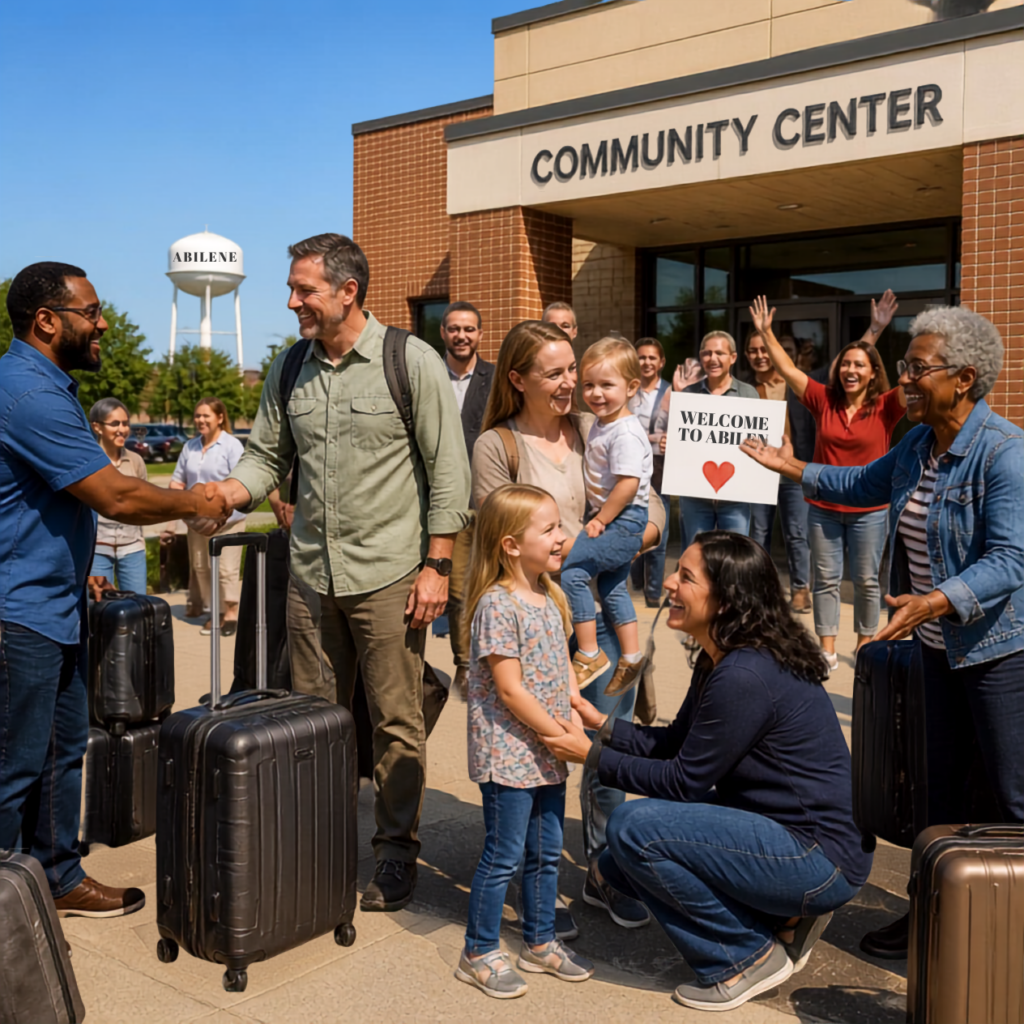
How Abilene Residents Can Be Patient with Afrikaner Families (Especially the Kids)
Moving to a new country is hard for anyone. For Afrikaner families coming to Abilene, everything feels different-even if they speak English. The kids feel it the most because school is where they spend most of their day.
Here’s how local residents, teachers, classmates, and parents can make the adjustment easier.
Give them time
Most kids need months (sometimes longer) to feel comfortable. They may seem quiet, shy, or unsure at first. That doesn’t mean they are unfriendly. They are still learning the unspoken rules of American schools: how lunch lines work, what jokes are normal, when it’s okay to speak up in class, and how to make friends.
Be patient if they:
- Speak with a strong accent or use different words
- Don’t know current slang, music, sports teams, or trends
- Prefer to stay with siblings or other South African kids at first
- Seem confused by group projects, sports tryouts, or school events
These things take practice, not lectures. Small, everyday kindness helps the most
- Smile and say hi first. A simple “Hey, want to sit with us?” at lunch goes a long way.
- Invite them to join a group, club, or game even if they seem hesitant.
- Explain things without making them feel dumb (“In Texas we usually…”) instead of laughing at differences.
- Notice when they try something new and give quiet encouragement.
Teachers and coaches can help by pairing new students with friendly classmates and checking in privately instead of putting them on the spot in front of the whole class.
Understand the social differences
South African schools and American schools often feel different. Kids may be used to stricter rules, different sports, or more formal ways of speaking to adults. Some may have grown up on farms and find city or suburban school life loud and fast. Others may carry stress from leaving home, so they can seem serious or tired. Patience means not assuming the worst. A quiet kid is usually just adjusting, not rejecting people.
What residents can do outside school
Parents and neighbors can help by welcoming the whole family. Invite them to a casual cookout, church event, or sports game. When adults model kindness, kids notice and copy it.
Abilene has welcomed refugee families for years. The same spirit that helped earlier arrivals works here too: steady kindness, realistic expectations, and room for people to grow at their own pace.
The children will adapt. Most do. They learn the language of the hallways, make friends, join teams, and eventually feel at home. Your patience simply speeds that process up and makes Abilene feel like a place worth belonging to.

This article is written by Devin Taylor September 2026. “Look it up!”